The best weight training tips for beginners are simple: start lighter than you think, learn a handful of big movements, train two or three times a week, add weight slowly and track what you do. That’s it. Most beginners don’t fail because they pick the wrong program. They fail because they do too much too soon, get sore or discouraged and stop. Here’s how to start lifting the right way.
1. Start light and learn the movement
Your first few weeks are about learning, not testing your strength. Pick a weight you could lift for a few more reps than you’re doing. If your form breaks down, the weight is too heavy. Good technique now lets you lift much more later, safely.
2. Focus on the big movements
Compound exercises work several muscles at once and give you the most return for your time. Build your workouts around these movement patterns:
- Squat: goblet squats or the leg press
- Hinge: Romanian deadlifts with dumbbells or a kettlebell deadlift
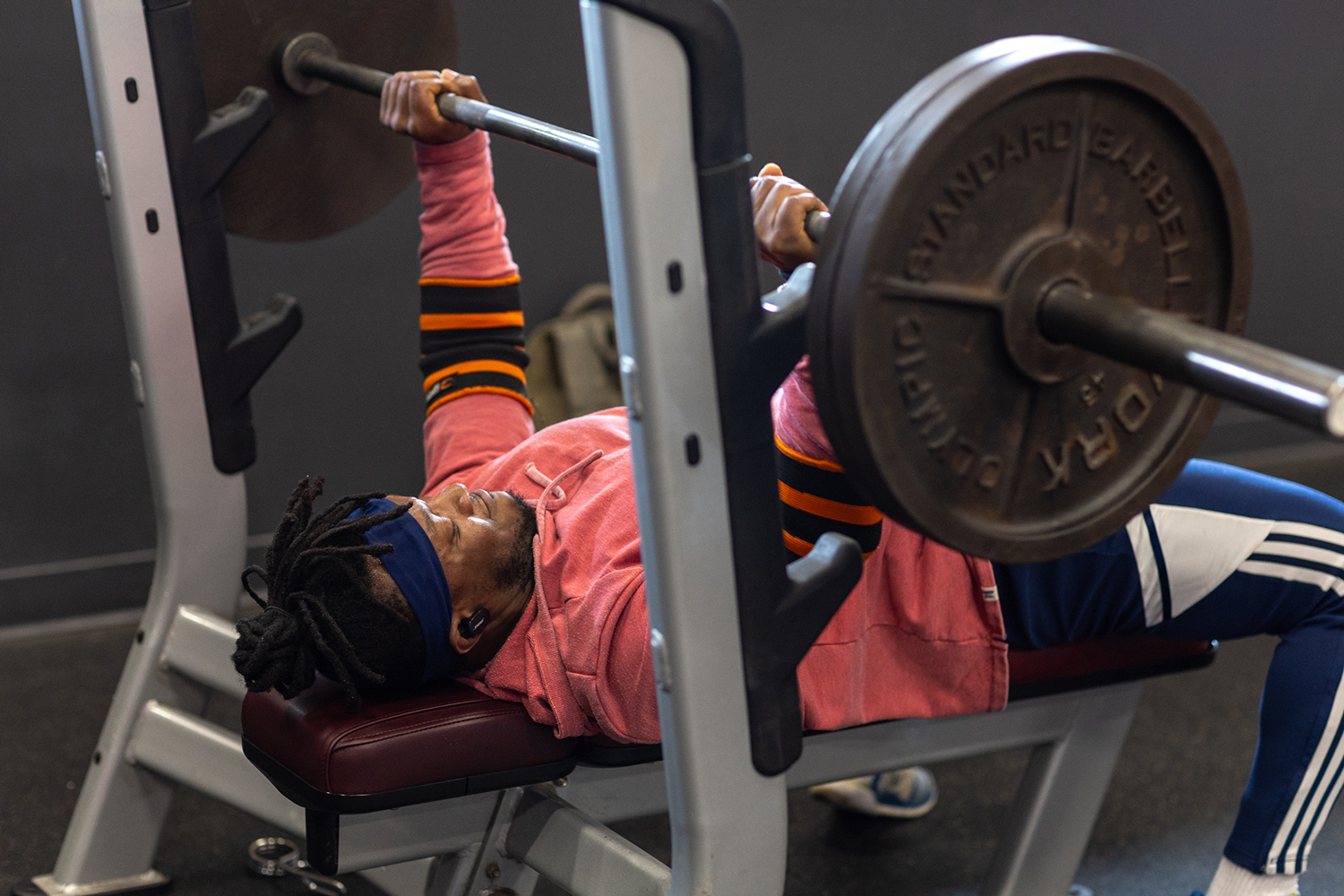
- Push: dumbbell bench press, push ups or the chest press machine
- Pull: dumbbell rows, cable rows or the lat pulldown
- Carry: holding dumbbells and walking, also called farmer carries
Add a little core work, like planks or dead bugs, and you’ve got a complete program.
3. A simple beginner weight training plan
Do this full body workout two or three times a week, with a day off in between:
- Goblet squat: 3 sets of 8 to 12 reps
- Dumbbell bench press: 3 sets of 8 to 12 reps
- Dumbbell row: 3 sets of 8 to 12 reps per side
- Romanian deadlift with dumbbells: 3 sets of 8 to 12 reps
- Farmer carry: 3 walks of about 30 to 40 steps
- Plank: 3 holds of 20 to 30 seconds
Rest about one to two minutes between sets. Warm up first with five minutes of easy cardio and a light set of each exercise.
If free weights feel like too much at first, start with this gym machine workout for beginners and move to dumbbells after a few weeks.

4. Add weight slowly
This is called progressive overload, and it’s how you get stronger. When you can do the top of your rep range, like 12 reps, for all your sets with good form, add a small amount of weight next time. Small jumps of a few pounds are perfect. Steady progress beats big jumps that lead to injury.
5. Track your workouts
Write down each exercise, the weight and the reps. A notebook or the notes app on your phone is enough. Tracking tells you exactly what to do next time, and seeing your numbers go up is one of the best motivators there is.
6. Rest and eat to recover
Muscles get stronger between workouts, not during them. Help them recover:
- Sleep seven or more hours most nights
- Eat protein at most meals, like eggs, yogurt, chicken, fish, beans or tofu
- Drink water throughout the day
- Take at least one or two rest days each week
Some soreness in the first few weeks is normal. Sharp or joint pain is not. If something hurts, stop and ask a trainer.
7. Expect progress to come in stages
In the first month, most of your progress comes from your body learning the movements, so the weights go up quickly. After that, strength keeps building more slowly. Visible changes to your body usually take a couple of months of steady training. Be patient and keep showing up.

Common beginner mistakes
- Lifting too heavy before learning the movement
- Skipping the warm up
- Doing a different random workout every day
- Only training the mirror muscles and skipping back and legs
- Rushing through reps instead of controlling the weight
- Comparing yourself to people who have been lifting for years
Get help when you need it
You don’t have to figure it all out alone. At Mike’s Fitness JP in Jamaica Plain, every membership includes a free fitness assessment. A certified trainer will show you the equipment, check your form and help you set up a plan for your goals.
If you’d like more coaching, personal training gives you a trainer who plans and adjusts your workouts as you get stronger. You can find a trainer who fits your goals on the Meet the Trainers page.
The gym has more than 15,000 square feet of space, with plenty of dumbbells, racks, machines and cables, so you’ll always have room to learn. It’s a short walk from the Stony Brook stop on the Orange Line, with free parking, and memberships have no contracts and no start up fees.
Your first step
Pick two or three days this week, follow the simple plan above and write down what you lift. In a month, you’ll be surprised by how far you’ve come.